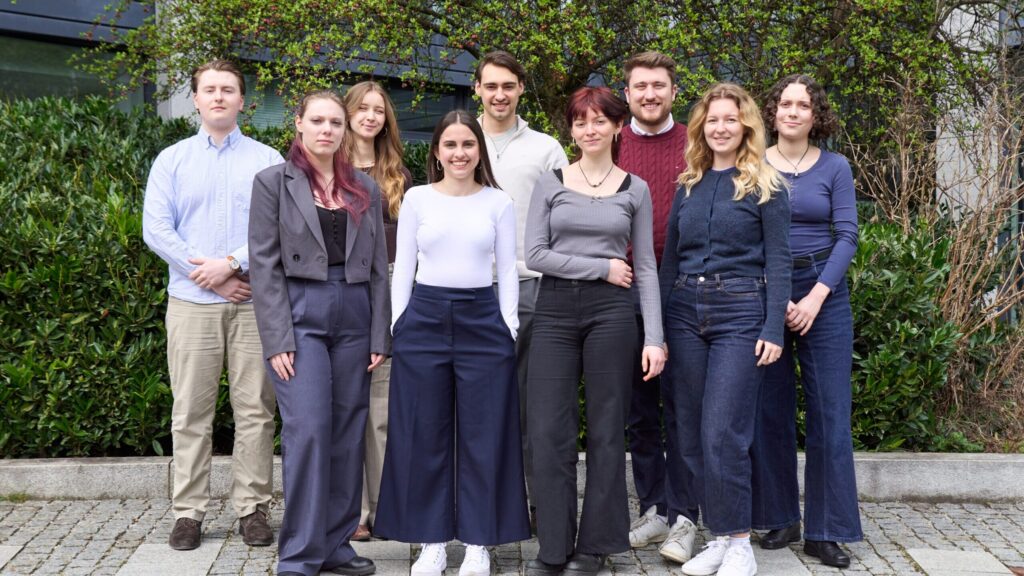
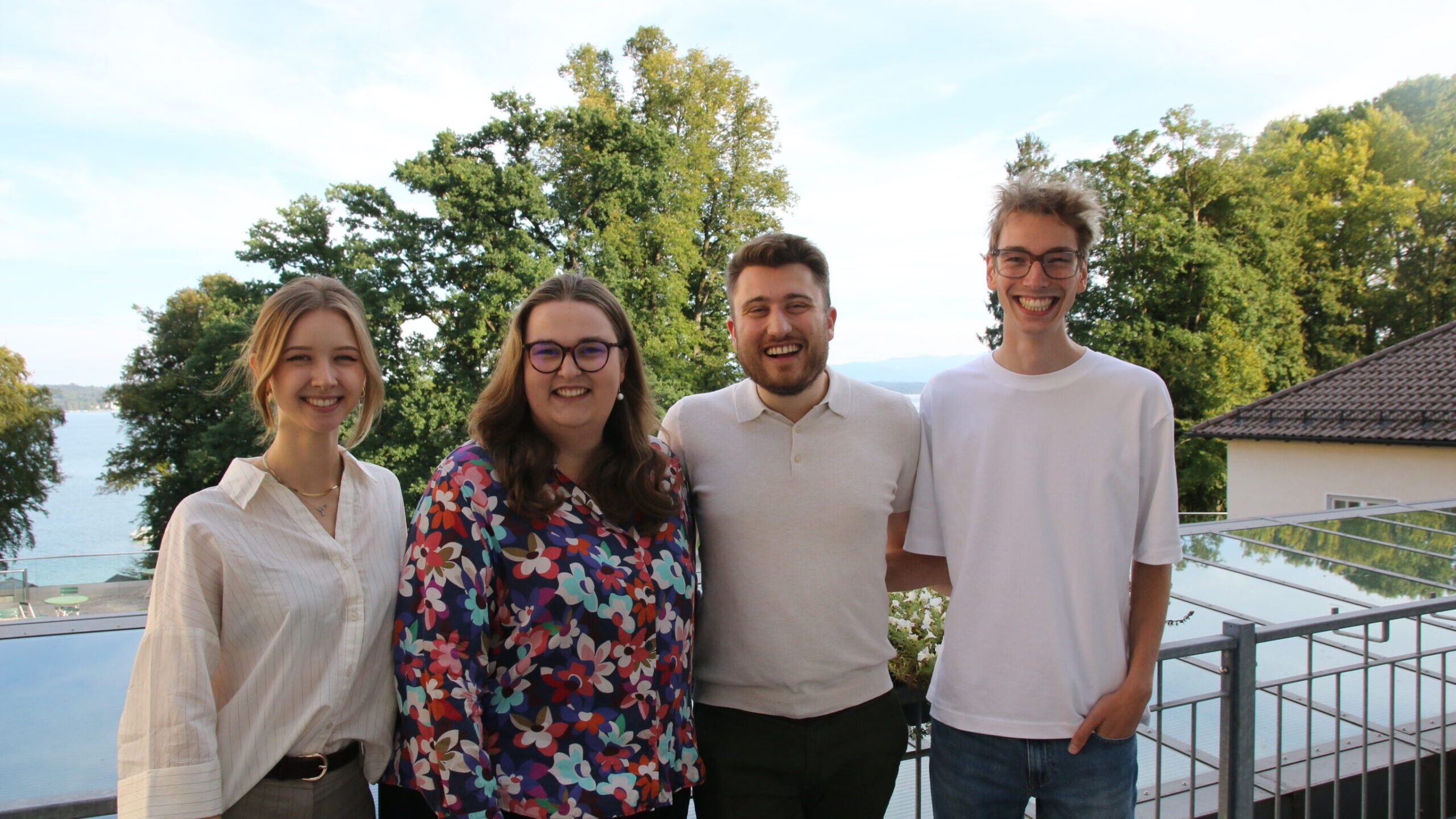
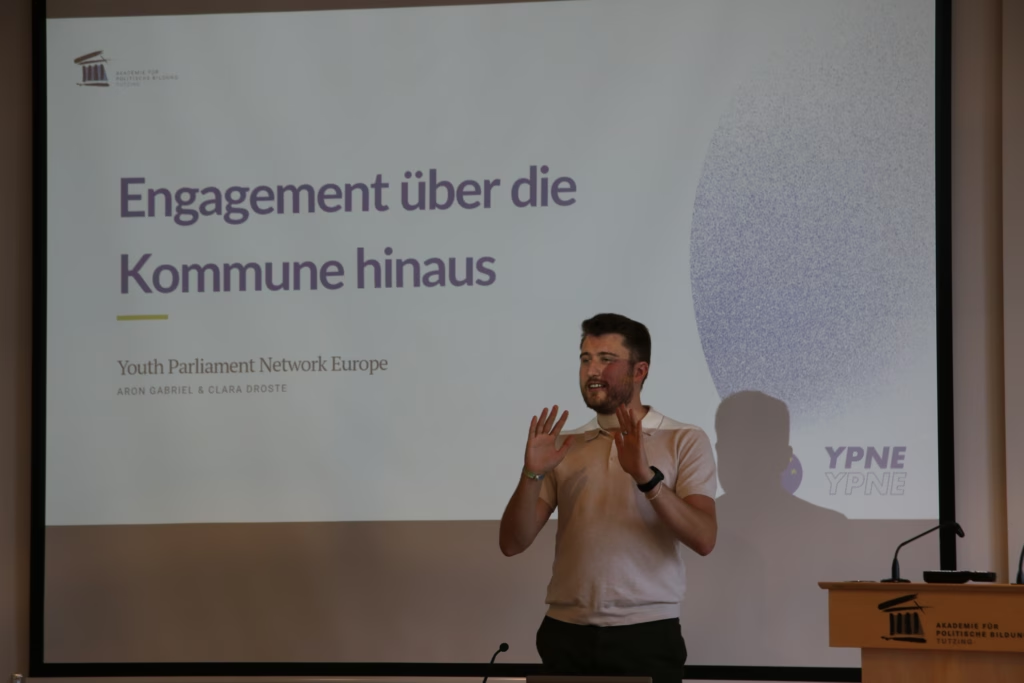
At the Academy for Political Education (“Akademie für Politische Bildung”) in Tutzing, Germany, learning is a joint effort: participants and discussion shape new ideas together. In September, two members of our team, Aron and Clara, brought YPNE to this setting. As part of the Shaping Local Communities conference (“Mitgestalten vor Ort”), they presented our work to a group of young, politically interested participants.
How can young people make their voices heard?
While some of the participants were already active as members, others were newly introduced to the concept of youth councils and parliaments. This mix made for a lively exchange: experienced members shared how they got started, while newcomers asked the questions that remind us why the basics matter. Together, the group looked at the many ways young people can take part in decisions that affect them, from youth councils and parliaments to local projects, petitions and open dialogue with decisionmakers. One message came through clearly: being heard starts with having a space to speak, and the confidence to use it.
What challenges do young people face?
To get to the heart of this question, we turned it into a game. Participants were given a set of statements describing challenges young people face today and were asked to rank them by priority. Among the statements were, for example: “Young people are disproportionately affected by the consequences of insufficient climate policy” and “Young people suffer more from difficult living conditions, such as starting a career in a weak economy.”
Ranking forced the group to make choices, and that is exactly what made the discussion so interesting. Participants had to weigh the statements against each other, explain why they rated one challenge higher than another and listen to arguments they had not considered. The results showed how differently priorities can be set, depending on personal experience and background, and how many of these challenges young people share, nonetheless.
How can we make civic engagement more European?
This is where YPNE comes in. Many of the issues young people care about, such as climate, education, digital rights and democracy, do not stop at national borders. Yet youth participation is often organised only locally or nationally. By connecting youth councils and parliaments across Europe, YPNE creates a space to exchange experiences, learn from one another and develop common approaches. Aron and Clara invited the participants to think beyond their own town or region and to see themselves as part of a wider European community of young people shaping democracy.
We are grateful to the Academy foe Political Education and to all participants for the open discussions and fresh ideas. Tutzing showed once more that youth participation grows when people come together, and that it grows even stronger when it is connected across Europe.